Should you color with markers or colored pencils? The answer depends on your style, your paper, and even your mood. Both mediums can produce beautiful results – and many colorists use a mix of the two.
Here is how to decide which tool to pick up for your next page.
TIP
If you are undecided, do the hybrid: markers for big shapes and backgrounds, pencils on top for shadows and texture. Use a backing sheet if you are using alcohol markers.
When Markers Are the Better Choice
Markers shine when you want:
- Bold, even color with very little effort.
- Smooth, streak-free fills in large areas like skies, walls, or backgrounds.
- Strong contrast that makes designs pop on the page.
They are especially satisfying on:
- Single-sided books with a blackout reverse page to hide bleed-through.
- Bold-and-easy line art where shapes are clearly defined and not too tiny.
Keep a scrap sheet behind the page to protect the next one, and use lighter pressure near the edges of shapes to avoid oversaturating the paper.
When Pencils Take the Lead
Colored pencils are perfect for:
- Soft gradients and subtle shading.
- Delicate textures – fur, fabric, leaves, and hair.
- Layering many colors without worrying about bleed-through.
They work on almost any coloring paper, including lighter-weight stock, because:
- They sit on top of the paper rather than soaking through it.
- Mistakes can often be softened or corrected with a good eraser.
If you enjoy slowing down and building color gradually, pencils are hard to beat.
The Paper Factor
Your book’s paper influences your choice:
- Thicker, smoother paper loves markers and gel pens.
- Slightly toothy paper (with a bit of texture) grabs colored pencil pigment beautifully.
If the book is single-sided with a dark back page, feel free to lean into markers. If it is double-sided or has very fine details, pencils and fineliners may be safer.
Mixing Both in One Page
You do not have to choose one medium forever. Many colorists like to:
- Block in large areas with markers (backgrounds, clothing, large shapes).
- Add depth and texture on top with colored pencils (shadows, highlights, fine details).
This hybrid approach gives you the speed of markers and the nuance of pencils.
Where to Start in a Cozy Series
If you are not sure what you enjoy most:
- Try a cozy, bold-and-easy book with medium-thickness paper.
- Use markers for main shapes and pencils for faces, fur, or small objects.
- Pay attention to which tool you reach for instinctively – that is your natural starting point.
As you fill more pages, you will get a feel for when you are in the mood for smooth, marker-heavy sessions and when you would rather settle into slower, pencil-based coloring. There is no wrong answer – just whatever keeps you happily coloring.
Books That Make Tool Differences Clear
Browse books that make it easy to feel the difference between markers and pencils:
- Cozy Ocean Bold and Easy Coloring Book — Excellent for smooth marker fills and quick wins.
- Flower Coloring Book — Better for layering, shading, and softer colored-pencil work.
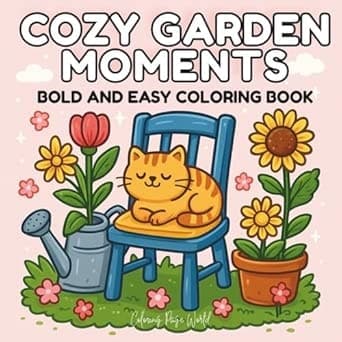
- Cozy Garden Moments Coloring Book — A good middle ground for trying both approaches on one page.
- Cute Kitten Coloring Book — Simple animal pages that make tool differences easy to notice.
TIP
Want to try these out first? Download a free sample coloring pack to print at home and test your coloring tools!
Coloring Tips & Guides
- Choose your next tool: Top Pens and Markers for Coloring Books
- Add crisp details: Gel Pen Tips for Crisp Line Work